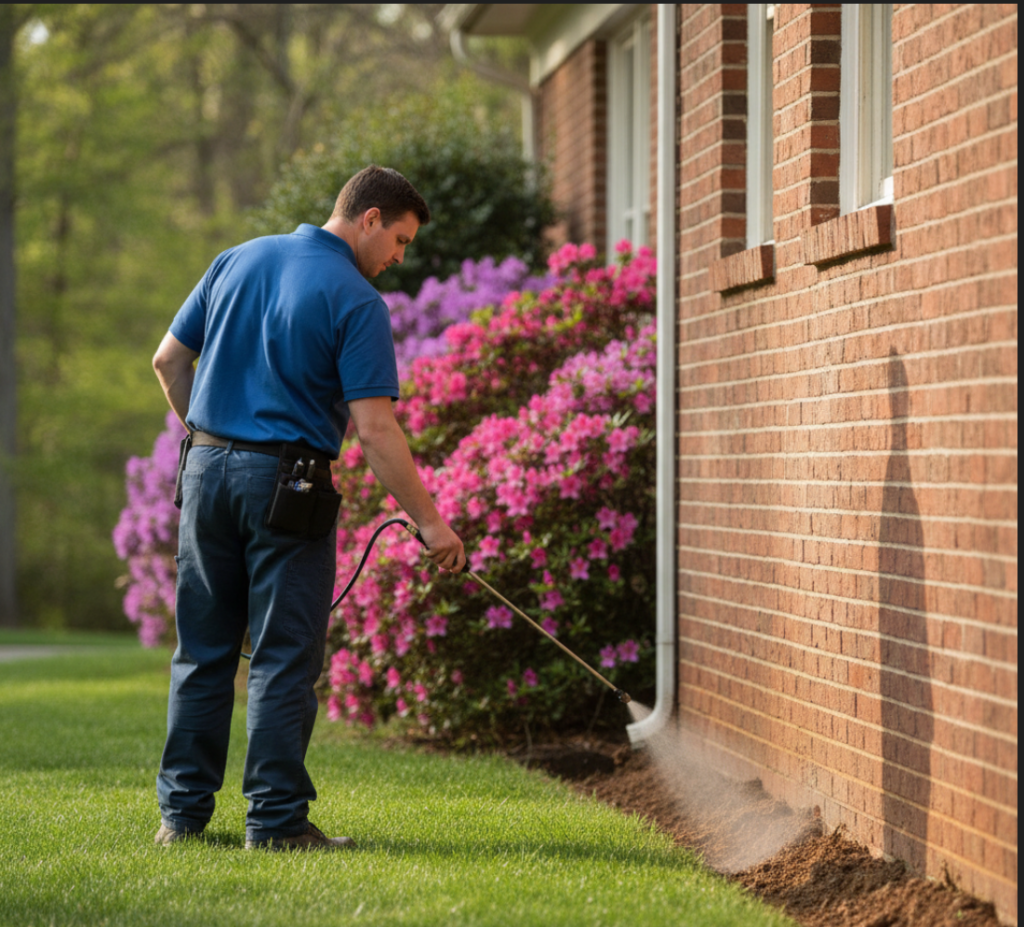
If you’ve lived in Raleigh for more than a summer, you already know the routine: humidity rises, temperatures stay high, and suddenly every bug in Wake County thinks your home is a great place to be. But termites are different from ants or spiders. They don’t just annoy you; they quietly eat away at your biggest investment from the inside.
In North Carolina, termite season typically begins in early spring and lasts through fall. The peak swarming often happens from March to May and again in September. However, winter won’t keep you safe. Our mild winters in the Triangle allow termites to remain active year-round if they’re already inside your walls.
First, Know Your Enemy: Eastern Subterranean Termites
The Eastern subterranean termite is the most common type found in Raleigh. They live underground in large colonies that can have hundreds of thousands of termites. They build mud tunnels to access wood above ground. Unlike carpenter ants, they eat the wood rather than just nesting in it. First know your enemy termite control Raleigh NC.
5 Signs Termites May Already Be in Your Raleigh Home
- Mud tubes on your foundation or crawlspace walls: These look like thin tunnels made of dirt and saliva. Termites create them to travel from the soil to the wood in your home without drying out. Check your foundation, brick siding, and utility entry points.
- Hollow-sounding wood: Tap your baseboards, door frames, or floor joists with a screwdriver handle. If it sounds hollow or crumbles easily, termites may have tunneled through, leaving just a thin layer of paint or wood veneer on the surface.
- Frass (but not the kind you think): Drywood termites leave small, six-sided droppings that resemble piles of salt and pepper. Subterranean termites don’t leave clear evidence—they use their droppings to build mud tubes—so don’t assume no frass means no termites.
- Discarded wings: On a warm day after it rains, you might see swarms of winged termites (alates) leaving a nearby colony. They drop their wings almost right away. If you find tiny, translucent wings clustered on windowsills, spider webs, or near doors, that’s a warning sign.
- Sticking doors or buckling floors: As termites consume the cellulose in wood, moisture can seep in and cause wood to warp. If your front door suddenly sticks for no clear reason or your floor feels soft, contact a professional before assuming humidity is the only issue.
Prevention: What Works in Raleigh’s Climate
Preventing termites is not a one-time fix. Our red clay soil, high humidity, and plenty of trees create ideal conditions. However, you can improve your chances.
- Keep wood away from your foundation: Pile firewood, mulch, and even stacked lumber at least 15-20 feet from your house. Avoid letting wood touch your siding or crawlspace vents.
- Direct water away from your home: Termites thrive on moisture. Clean your gutters, extend downspouts at least 4-6 feet from the foundation, and fix any leaking outdoor faucets.
- Seal cracks and gaps: Termites can squeeze through a gap as small as 1/32 inch. Caulk foundation cracks, seal around pipes and wires entering your home.
- Schedule a professional annual inspection: A licensed termite inspector knows where to look. Many exterminators in Raleigh offer free inspections or low-cost checks to termite control Raleigh NC.
- Consider a liquid soil barrier or bait station system: For high-risk areas, professional treatments like liquid barriers or bait stations are highly effective.
What if You Already See Signs?
Don’t panic, but don’t wait either. Call a local pest control company in Raleigh that specializes in termite treatment. Request a full inspection, not just a spot treatment.
Termite season in Raleigh is real. Every spring, local exterminators encounter homes with thousands of dollars in damage that began with just a few winged termites slipping through an unsealed crack. The good news? You can outsmart them. Look for the signs, control moisture, move your firewood, and get an annual inspection from someone familiar with North Carolina pests.
Need a local termite inspection or have questions about prevention for your specific Raleigh neighborhood? Reach out to Call Now Raleigh Pest Control Expert—we’re happy to help you keep your home safe.